Lugworm
Slicing, material experiments, and machine control in Grasshopper.
Named after the lugworm (German: Wattwurm), which casts coiled strings of sand that look like extruded layers.
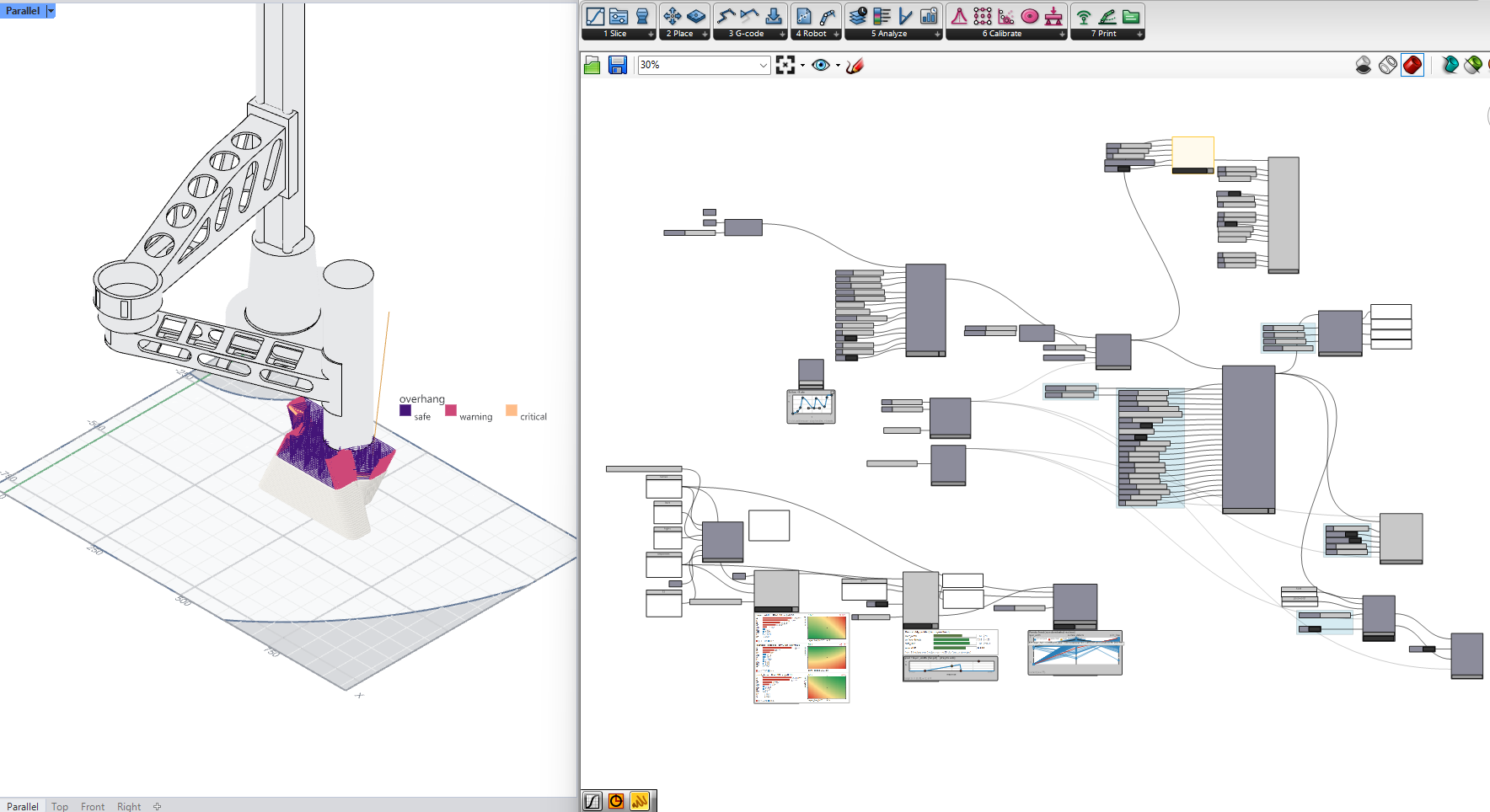
Lugworm is a Rhino 8 plugin for clay and cementitious-material 3D printing. It was developed at the Institute of Digital and Autonomous Construction (IDAC), Hamburg University of Technology, for liquid deposition modelling (LDM) in a laboratory setting.
The public package is being prepared. For early access, contact jasper.vollmert@tuhh.de. The installation guide explains how to install the package once you have it.
Find the right guide
| Task | Start here |
|---|---|
| Install the Rhino 8 Windows package | Installation |
| Create and preview a first toolpath | Getting started |
| Understand how the components connect | Component Map |
| Look up inputs, outputs, or optional groups | Component reference |
| See the slicing and DoE workflows on the canvas | Workflows |
| Report a problem or get in touch | About |
Safety
Lugworm generates toolpaths and can connect to Duet machines. Review every G-code file and robot program in Robot Simulation before running it. Keep the emergency stop within reach and stay with a running print.
The drawn robot models are approximate. Read the reach, joint-limit, and speed checks as well as inspecting the preview. Machine-state and board-identity checks block control actions when they fail.
No warranty
Lugworm is provided without warranty of any kind; see the MIT License for the full disclaimer.
Machine control has been tested only on our own machine. Treat any other machine as untested. To collaborate on making a machine compatible, see About.